April 16, 2026 • Cara Meltzer • 9 min reading time • Prices verified June 5, 2026
Insulated Shaker Bottles: The Stainless Steel Upgrade Guide for Gym Bags and Long Commutes
If you’ve ever pulled a plastic shaker bottle out of your gym bag an hour after blending a protein shake only to find it warm, separated, and vaguely offensive-smelling — you already understand the core problem this article solves. A shaker bottle is simply a portable container with some kind of mixing mechanism (usually a wire whisk ball or a blending grid) that helps you combine powders and liquids without a blender. The plastic versions that come bundled with a tub of protein powder do the job, barely. Insulated stainless steel shaker bottles do something different: they use a vacuum-sealed double wall — two layers of steel with the air sucked out between them — to keep cold drinks cold for hours and warm drinks warm, while also ditching the plastic-smell problem entirely. If your commute runs longer than 30 minutes, if you train more than four days a week, or if you’ve just grown tired of replacing a $10 bottle every few months, this guide will help you figure out whether the upgrade to a $35–$60 stainless model is worth it — and which specific features actually matter versus which ones are marketing noise.
| EDITOR'S PICK[Ice Shaker Insulated Stainless…](https://www.amazon.com/dp/B0F3PHJPF2?tag=greenflower20-20) | Mid-tier[BlenderBottle Radian Shaker Cup…](https://www.amazon.com/dp/B0DPJH2JL5?tag=greenflower20-20) | Budget pick[BlenderBottle Strada Shaker Cup…](https://www.amazon.com/dp/B07C81F48R?tag=greenflower20-20) | |
|---|---|---|---|
| Capacity | 32oz | 26oz | 24oz |
| Mixing mechanism | Twist-on Agitator | Wire Whisk | Wire Whisk |
| Cold hours claimed | 30+ | — | — |
| Odor-free | ✓ | — | — |
| Price | $34.99 | $27.99 | $19.97 |
| See on Amazon → | See on Amazon → | See on Amazon → |
Why Stainless Steel and Vacuum Insulation Actually Change the Game
Let’s be direct about what you’re paying for when you step up from a standard plastic shaker to a double-wall stainless bottle, because the premium isn’t trivial.
Temperature retention is the headline feature. A standard single-wall plastic bottle has essentially zero insulation — your shake is at room temperature within 30–45 minutes. Vacuum-insulated stainless bottles, in contrast, are manufacturer-rated to hold cold temperatures for 12–24 hours depending on the brand. Wirecutter’s best water bottles guide consistently notes that double-wall vacuum insulation is the single most reliable predictor of real-world temperature performance across brands, outperforming foam insulation and single-wall stainless by a wide margin.
The odor and staining problem is real and persistent. Consumer Reports’ reusable bottle materials overview notes that polypropylene and HDPE plastics — the most common materials in budget shaker bottles — develop microscopic surface scratches over time that harbor bacteria and protein residue, which is why older plastic shakers develop that familiar sour smell no amount of dish soap fully removes. Stainless steel’s non-porous surface doesn’t absorb odors or flavors, which matters enormously if you rotate between protein shakes, pre-workout, and plain water in the same bottle.
The microplastics conversation has entered mainstream buying decisions. Healthline’s overview of microplastics in food containers notes that research into plastic leaching from reusable bottles — particularly when liquids are warm, acidic, or left sitting for extended periods — has increased buyer interest in glass and stainless alternatives. Stainless steel doesn’t leach in the way plastics do. That’s a genuine advantage, not a marketing claim, though it’s worth noting that stainless steel does require food-grade interior coatings on some models, so it’s worth confirming a bottle’s interior is bare 18/8 stainless rather than a proprietary coating.
The mixing mechanism still matters. Insulated stainless doesn’t automatically mean better mixing. Some stainless bottles include the wire whisk ball from the plastic era; others use a built-in agitator or mesh screen. The whisk ball is still the most effective option for breaking up thick protein powders, per aggregate owner reviews — models that rely on mesh grids alone tend to leave lumps in higher-protein formulas.
The Key Specs to Compare (And Which Ones Are Marketing Noise)
Here’s where practitioners get tripped up: the spec sheet for shaker bottles looks simple, but several numbers are consistently misread.
By the numbers — what matters in a stainless shaker:
| Spec | Minimum worth considering | Sweet spot | Marketing noise? |
|---|---|---|---|
| Wall construction | Double-wall vacuum | Double-wall vacuum | Single-wall “stainless” — no insulation |
| Interior steel grade | 18/8 (304) food-grade | 18/8 (304) food-grade | ”Premium stainless” without grade disclosure |
| Capacity | 20 oz | 24–28 oz | Anything over 32 oz for daily shakes |
| Cold retention (manufacturer-rated) | 12 hours | 18–24 hours | Claims over 36 hours for shake use |
| Lid type | Flip-top with seal | Twist-lock + carrying loop | ”Leakproof” without a physical lock mechanism |
A few notes on the noise column: “premium stainless” without a disclosed alloy grade is a red flag. The industry standard for food-safe stainless is 18/8 (also labeled 304-grade), which refers to the ratio of chromium and nickel in the alloy that prevents rust and corrosion. Bottles that don’t disclose their steel grade are often using lower-grade alloys that are more prone to rust, particularly around the rim and in the lid mechanism. Good Housekeeping’s shaker bottle reviews from 2025 flagged undisclosed steel grades as a consistent quality predictor across brands tested.
Capacity is genuinely personal, but there’s a practical ceiling. Most standard protein shake recipes (one to two scoops of powder plus liquid) land in the 20–24 oz range. A 32 oz bottle sounds like flexibility; in practice it adds weight to your gym bag and makes the bottle too large to fit in most car cup holders. The 24–28 oz range covers almost every use case without the bulk penalty.
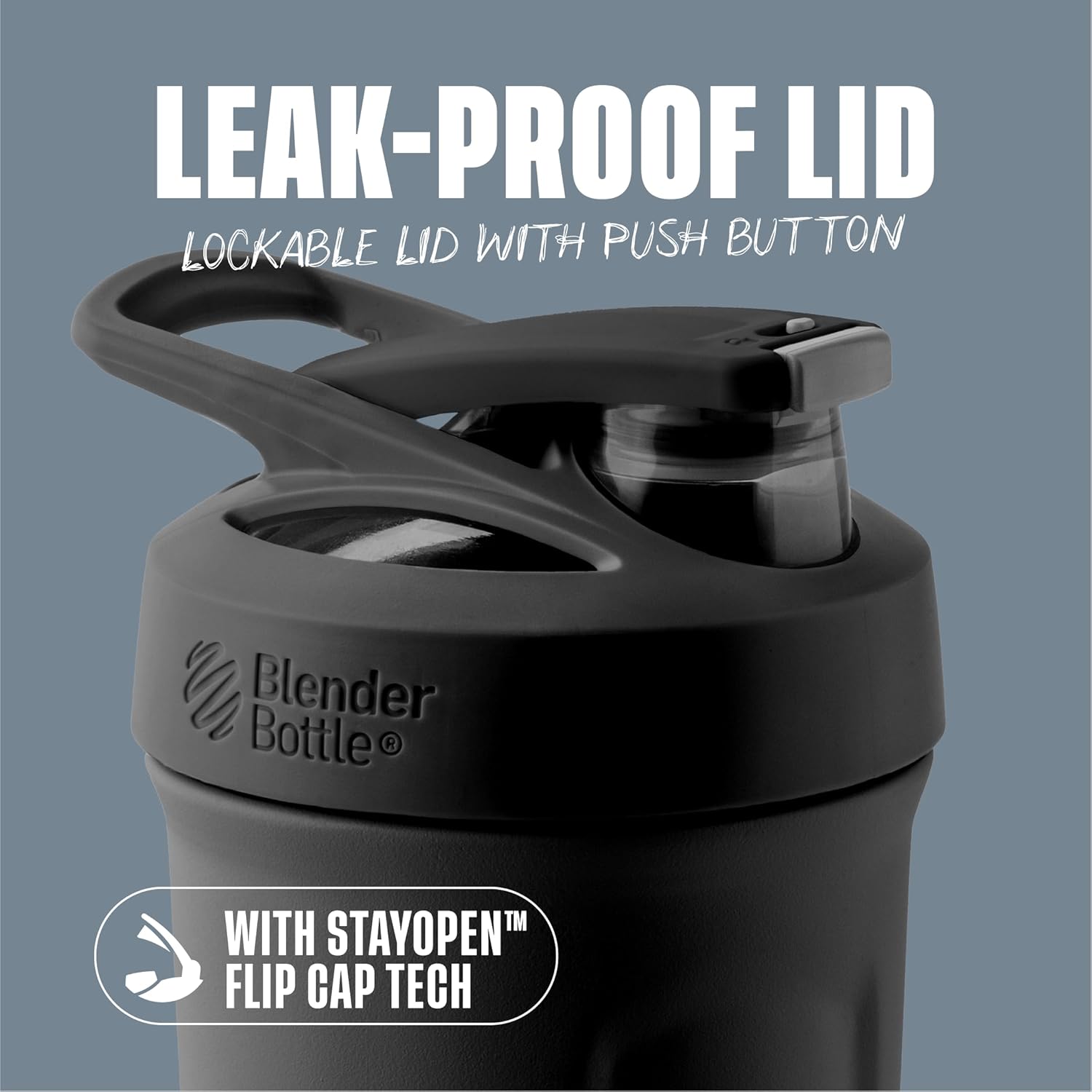
Lid design is where premium shakers earn their price difference most clearly. A flip-top lid without a locking mechanism will eventually leak under bag pressure — owners across aggregated reviews report this as the number-one failure mode on budget stainless shakers. A twist-to-lock lid or a secondary latch mechanism adds maybe 30 seconds of friction to your morning and eliminates that failure entirely.
Brand-Level Tradeoffs: Where the Established Names Actually Differ
This isn’t a ranking — it’s a decision frame. The three brands most consistently cited in the $35–$60 stainless shaker category are BlenderBottle, Hydra Cup, and Stainless King, and they serve meaningfully different buyers.
BlenderBottle Radian Insulated is the safe default. BlenderBottle is essentially the category-defining name in shaker bottles, and the Radian is their stainless upgrade over their plastic base model. It uses 18/8 steel, a twist-off lid with a carry loop, and the same wire whisk ball that’s been their mixing standard for years. Owners consistently report that the lid seal holds under real bag conditions and that odor resistance is excellent after prolonged use. At around $40 (2026 pricing), it’s the recommendation for someone who wants to solve the core problem — smell, temperature, durability — without overthinking the purchase. The tradeoff: it’s a relatively conservative design, not notably compact, and the carry loop is fixed rather than detachable.
Hydra Cup earned its audience in the dual-shaker niche — their flagship models include two separate compartments for pre- and post-workout supplements. Apartment Therapy’s insulated bottle roundup notes that Hydra Cup’s dual-chamber design is genuinely useful for users who run a multi-supplement protocol, not just a gimmick. If your morning involves a pre-workout drink followed by a protein shake and you’re tired of carrying two bottles, Hydra Cup’s stainless models are worth the $45–$55 price point. The tradeoff: dual-chamber lids have more moving parts, and owners note that the seal integrity on the divider occasionally requires replacement after six to twelve months of daily use.
Stainless King sits at the intersection of shaker bottle and premium insulated tumbler. Their bottles are noticeably heavier than BlenderBottle’s equivalent, with a more robust lid mechanism and a wider mouth that makes cleaning easier. The wider mouth also makes adding ice cubes or blending directly with a single-serve blender more practical. Owners in long-run reviews note exceptional lid durability — the Stainless King lid locking mechanism is consistently rated as the most reliable of the three. The tradeoff: the added weight (roughly 0.5 oz heavier than comparable BlenderBottle models) is real if you’re already carrying a heavy gym bag, and the design aesthetic is more utilitarian than premium.
The Cost-Per-Use Math That Closes the Decision
The $40 sticker price on a mid-tier stainless shaker can feel steep against a $10 plastic bottle. The math changes when you factor in replacement cadence.
Most plastic shaker bottle owners in aggregated forum discussions and product review patterns report replacing their bottles every 6–12 months due to odor buildup, cracking at stress points (particularly around the lid threading), or general degradation. A stainless steel bottle from a brand with a solid warranty — BlenderBottle offers a limited lifetime guarantee on their Radian line — realistically lasts three to five years with normal use.
Run the simple version: two to four plastic shakers over three years at $10 each = $20–40. One stainless bottle over three years at $40 = $40. At the midpoint, you’re paying approximately the same. Add in the time cost of reordering, the frustration cost of smell and leaks, and the stainless bottle wins on cost-per-use before you factor in any quality-of-life premium.
The stronger argument for the upgrade is for daily users. If you’re shaking once a day, five days a week, a $40 bottle spread over three years and roughly 780 uses costs about five cents per use. The cheap plastic replacement costs more per use and delivers worse performance.
The Decision Rules: If X, Then Y
After sorting through the specs, brand tradeoffs, and math, here’s how to close the decision:
If your primary problem is smell and odor: Any 18/8 stainless double-wall bottle solves this. Start with the BlenderBottle Radian — it’s the most field-tested option in this category with the widest owner feedback base, and you’re not overpaying for features you don’t need.
If you run a multi-supplement morning protocol (pre-workout + protein, separate drinks): Hydra Cup’s dual-chamber stainless model is the right tool. The design quirk is a genuine utility, not a gimmick, and no single-chamber bottle replicates it without carrying two bottles.
If your commute is long (2+ hours) or your gym bag goes from car to office to gym: Cold retention becomes your primary spec. Prioritize bottles rated for 18+ hours and confirm the lid mechanism has a physical lock. The Stainless King or BlenderBottle Radian both qualify; the decision comes down to whether you value a lighter bottle (BlenderBottle) or a more robust lid (Stainless King).
If you’re buying your first stainless shaker and aren’t sure: Spend $35–$45, not $55+. The performance ceiling in this category flattens quickly — you’re paying for lid refinements and aesthetic details above $45, not meaningfully better insulation or mixing. Get the mid-tier, use it for a year, and upgrade with more specific preferences if you find the limits.
The premium plastic-shaker era served its purpose. For anyone who blends regularly, commutes with their nutrition, or has just grown tired of replacing the same $10 bottle over and over — the stainless steel upgrade is one of those purchases that’s quietly obvious in hindsight.