April 29, 2026 • Cara Meltzer • 11 min reading time • Prices verified June 5, 2026
Vitamix Ascent X3 vs. X5 vs. VX1: Is the New Series Worth the Sticker Shock
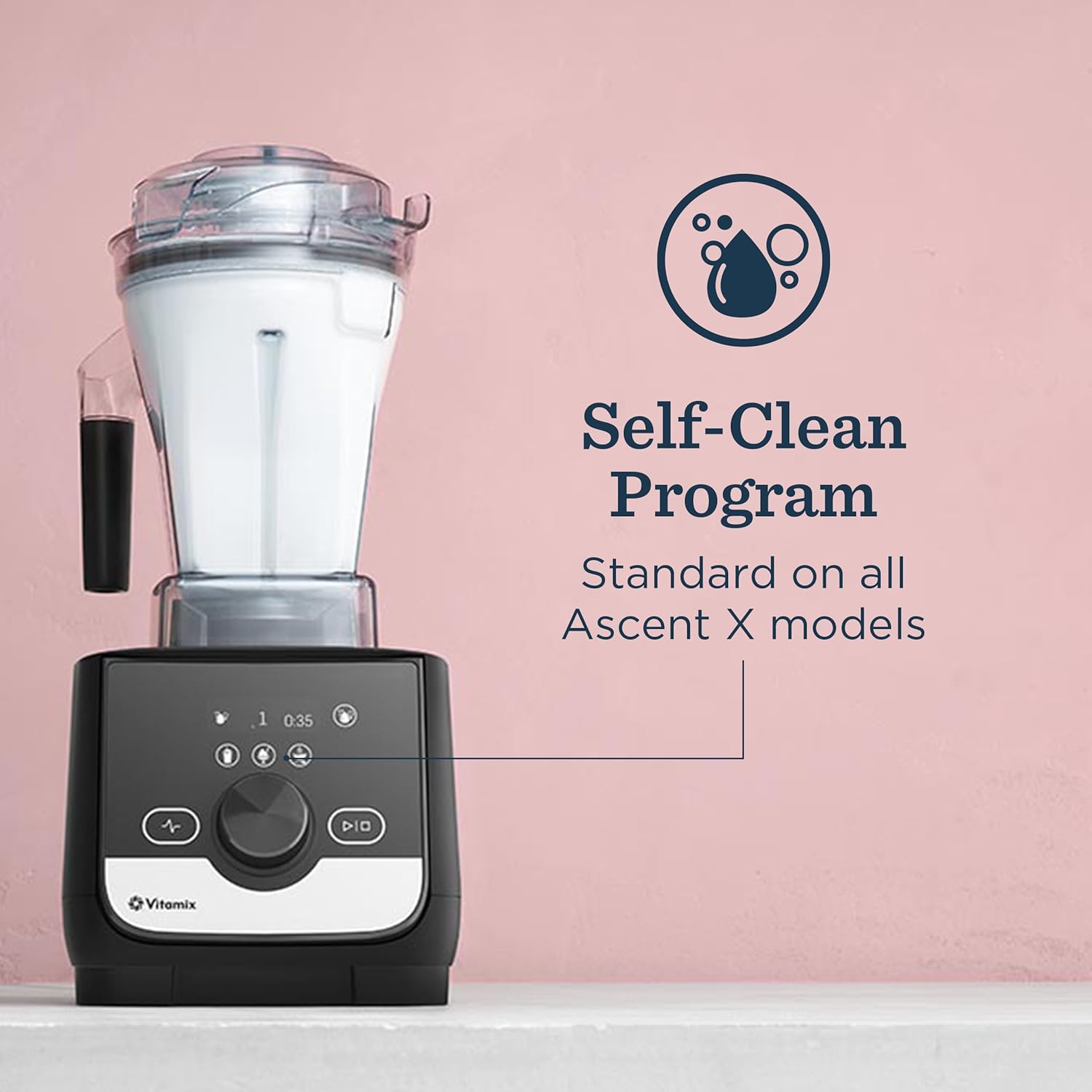
If you’ve been watching the blender market lately, you’ve probably noticed the numbers have gotten a lot bigger. Vitamix — the brand that essentially created the category of serious home blenders — launched its Ascent X Series in late 2024 and into 2025, and the prices gave even longtime fans pause. We’re talking about blenders that range from roughly $750 to well over $1,000 at full retail. To put that in context: a mid-tier Ninja blender runs $250, a Vitamix A3500 (previously their flagship) retails around $600, and a professional restaurant blender might cost $1,500. The Ascent X Series lands in that uncomfortable middle space where you’re paying near-commercial money for a home-kitchen machine. So the question this article is going to answer honestly is: what exactly are you getting for that premium, how do the three models in the series — the X3, X5, and VX1 — actually differ from each other, and is any of them worth buying over a proven $500–$600 alternative? We’ll break down the specs, name the real tradeoffs, and end with a clear decision framework.
What’s Actually New in the Ascent X Series (And What’s Marketing)
Before comparing models, it’s worth understanding what Vitamix is claiming changed from their previous Ascent A Series lineup, because not everything on a spec sheet represents a genuine upgrade.
The motor story. Vitamix official Ascent X Series product pages list the X3 at 2.4 peak horsepower, the X5 at 2.4 peak horsepower, and the VX1 at 3.0 peak horsepower. The older A3500 — still available and still excellent — is rated at 2.2 peak horsepower. “Peak horsepower” is one of the most abused numbers in blender marketing: it represents the maximum output the motor can hit in short bursts under load, not a continuous operating figure. Serious Eats’ blender coverage has consistently noted this distinction, pointing out that peak horsepower numbers rarely translate directly to real-world blending differences between machines in the same performance tier. That said, the jump from 2.2 to 3.0 HP in the VX1 is significant enough that it represents a genuine category step up, not just spec-sheet inflation.
The SELF-DETECT container system. This is one feature in the Ascent X Series that is genuinely new and not available in the older A Series. SELF-DETECT means the blender base reads which container you’ve placed on it — the standard 64-ounce wet container, a 20-ounce personal cup, an 8-ounce dry grains container — and automatically adjusts its program settings accordingly. If you switch from blending a large smoothie batch in the 64-oz container to grinding flour in the dry container, the machine recalibrates without you changing any settings manually. Vitamix’s official Ascent X Series product documentation describes this as a way to eliminate user error when running multiple container types. This feature is genuinely useful if you own more than one container, but it is not a reason to buy the machine if you only plan to use the standard jar.
Connectivity and the Vitamix Perfect Blend App. The X5 and VX1 — but not the base X3 — include wireless connectivity that pairs with Vitamix’s Perfect Blend app, giving access to guided programs and automated blending sequences. Good Housekeeping’s coverage of the Vitamix Ascent X5 notes the app experience is polished and the guided programs work as advertised, though reviewers consistently observe that experienced blender users rarely rely on preset programs once they develop their own workflow.
What hasn’t changed. The blade design, the container shape, and the core high-speed motor architecture are evolutionary, not revolutionary, departures from the A Series. Consumer Reports’ blender reliability ratings have historically placed Vitamix at or near the top for long-term durability, and that reputation carries forward — but it was already earned by the A Series, not newly established by the X Series.
X3 vs. X5 vs. VX1: The Real Differences
Here is where most buyers get lost. The marketing language between models sounds distinct, but the actual functional gaps are narrower than the price gaps suggest. The comparison below breaks each model into its own tier so the tradeoffs are concrete.
The Ascent X3: The Entry Point That’s Hardest to Dismiss
Peak HP: 2.4 | Connectivity: SELF-DETECT only | Wireless/App: No | Retail Price (May 2026): ~$750
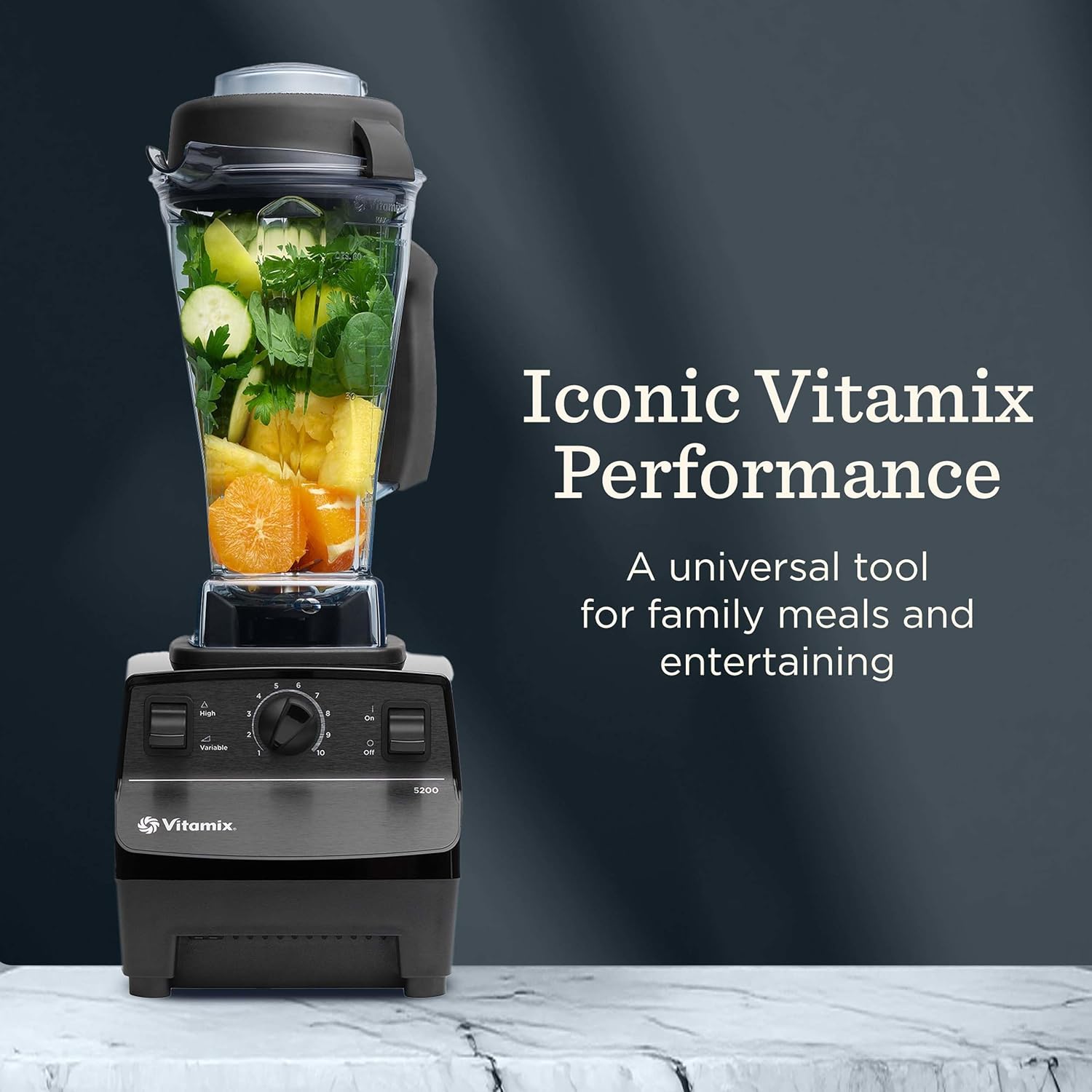
The X3 is the entry point to the series and, honestly, the most defensible purchase if you’re committed to buying into the X lineup at all. You get SELF-DETECT, a 2.4 HP motor, and Vitamix’s standard 10-speed dial interface — the same physical control panel the brand has used reliably for years. What you don’t get is wireless connectivity or app integration. For most buyers blending smoothies, soups, and nut butters, this isn’t a real loss. The X3’s practical performance ceiling is essentially identical to the X5’s in real-world daily use. Its main weakness relative to the tier above it is the absence of guided programs — a gap that matters primarily to newer blender users who want automated sequences rather than manual control.
Vitamix
$459.00
In stock on Amazon
Check price on AmazonThe Ascent X5: The Upgrade That’s Hardest to Justify
Peak HP: 2.4 | Connectivity: SELF-DETECT + App | Wireless/App: Yes | Retail Price (May 2026): ~$900
The X5 charges roughly $150 more than the X3 for the wireless module and app access. Wirecutter’s high-performance blender guide has been consistently skeptical of “smart” blender features, noting that preset programs add convenience for new users but rarely change outcomes for experienced operators. Good Housekeeping’s blender coverage reaches a similar conclusion: the app integration is well executed, but it’s a convenience layer rather than a performance upgrade. If you’re the kind of person who will genuinely use guided recipes from the app — and you’re new enough to high-performance blending that automated sequences add meaningful value — the X5 upgrade is defensible. If you’re reading a detailed comparison article to make this decision, you are probably not that person. The X5 occupies an awkward position in the lineup: it costs more than the X3 for reasons that are hard to quantify in the blender, and it costs less than the VX1 without the motor headroom that would actually justify a premium. It is the model in this series that is hardest to recommend.
Vitamix
$459.00
In stock on Amazon
Check price on AmazonThe VX1: A Different Conversation Entirely
Peak HP: 3.0 | Connectivity: SELF-DETECT + App | Wireless/App: Yes | Retail Price (May 2026): ~$1,050
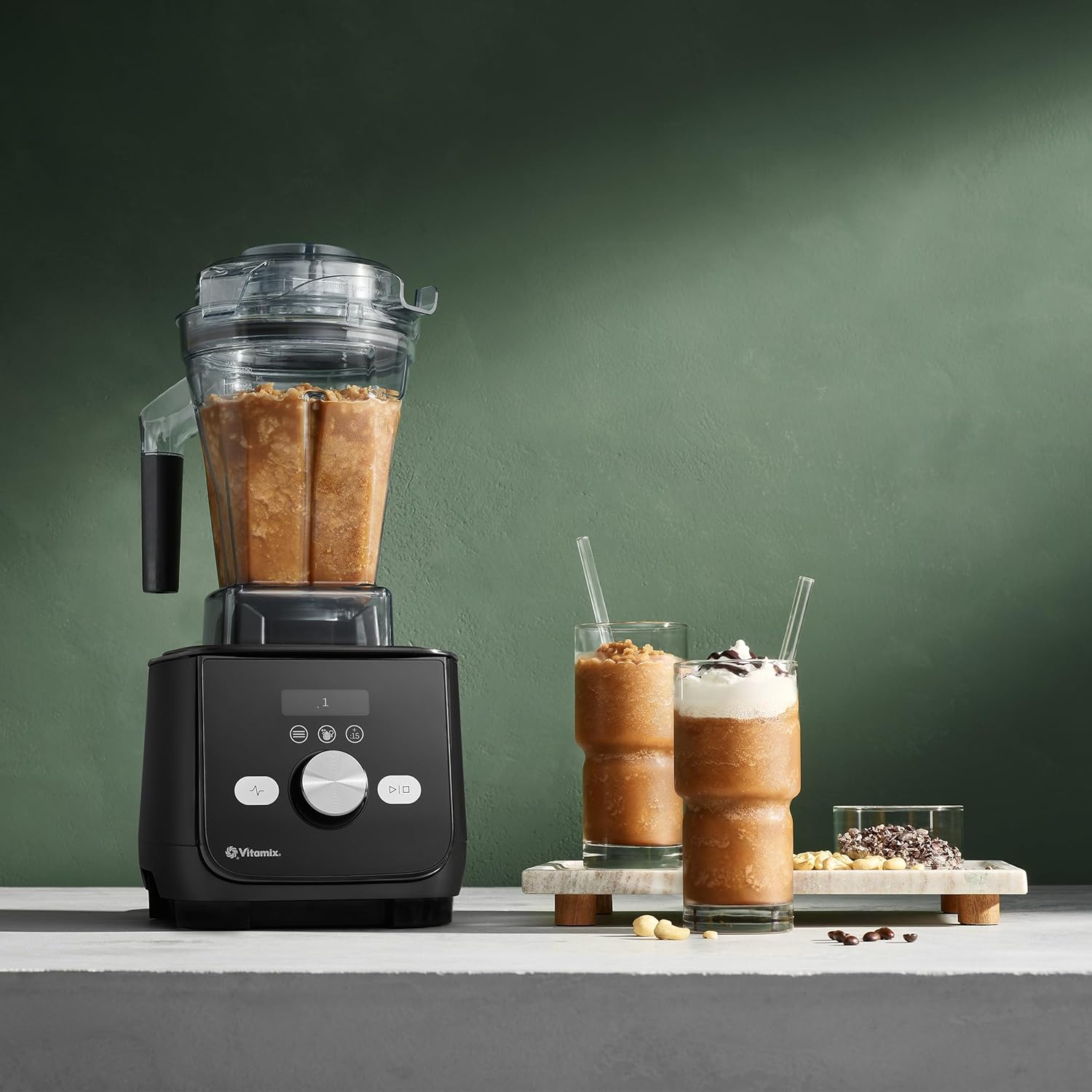
The VX1 is a different conversation. The jump to 3.0 peak horsepower is meaningful for specific use cases: large-volume processing (think eight servings of soup in one batch), frozen ingredient loads that would strain a 2.4 HP motor, and continuous-duty applications like a personal chef running multiple blending cycles in sequence. Vitamix’s official VX1 product documentation notes the motor is engineered for higher sustained output, not just higher peak burst numbers. For a home athlete running three or four full cycles back-to-back daily, or a small juice bar operator treating this as a semi-commercial investment, the VX1 represents a credible premium. For a household making two smoothies a morning, it is overkill by a wide margin. One practical note that Vitamix’s product specifications surface and that buyers frequently overlook: the VX1, with its more substantial motor base, runs approximately 17.5 inches tall with the standard 64-oz container in place. Standard upper cabinet clearance in kitchens built before roughly 2010 is often 18 inches. That is a tighter fit than most buyers anticipate, and it’s worth measuring before ordering.
Vitamix
$749.95
In stock on Amazon
Check price on AmazonThe Honest Alternative Math
The hardest thing to say plainly — and the thing most brand-adjacent blender coverage skips — is that the A Series the X Series replaced was already excellent, and the refurbished market makes the calculus even sharper.
A certified reconditioned Vitamix A3500 currently lists on Vitamix’s own website at roughly $350–$400, comes with a five-year warranty, and performs at a level that Wirecutter’s blender recommendations have described as more than sufficient for any home blending task. The X3 costs roughly $750 new. That’s a $350–$400 premium for SELF-DETECT, a marginal motor uptick, and a newer industrial design. The cost-per-use math only closes if you’re buying multiple containers — where SELF-DETECT pays real dividends by automating program selection — or if the long-term warranty extension matters to your planning horizon. The X Series carries a 10-year warranty on new units versus the A Series’ 7-year on new units, according to Vitamix’s official warranty documentation.
Consumer Reports’ blender reliability data showing high Vitamix owner satisfaction rates well past the five-year mark gives that warranty real substance. But 10 years of warranty coverage only matters if you’re confident you’ll actually use the machine for a decade. For serious home cooks and daily-smoothie athletes who will run this machine hard for years, the warranty math is legitimately worth modeling out. For buyers who upgrade kitchen appliances on three-to-five year cycles regardless, it’s not a differentiating factor.
Serious Eats’ blender testing framework makes a point worth repeating here: peak horsepower numbers between machines in the same general tier should be weighted lightly relative to real-world texture results and noise at operating speed. By that standard, the gap between a well-maintained A3500 and the X3 is narrower than the $350–$400 price delta implies.
Who Should Actually Buy Each Model
This is where we get to the decision framework. You’ve read the tradeoffs — now here’s the honest “if X, then Y.”
If you already own a Vitamix A Series and it’s working: Don’t upgrade. The X Series offers no improvement that a functioning A3500 or A2500 owner will notice in daily use. Put the $750 toward a second container, a Vitamix dry grains container, or a personal cup adapter — accessories that expand what you can already do without replacing a machine that isn’t broken.
If you’re buying your first serious blender and your budget is $600–$800: The certified reconditioned Vitamix A3500 from Vitamix.com is the recommendation before the X3 enters the conversation. You get the same core performance profile, Vitamix’s refurbishment standards — which Consumer Reports’ blender reliability coverage consistently validates as a meaningful quality floor — and a warranty that covers real-world use for years. Move to the X3 new only if the SELF-DETECT system is specifically valuable to you, meaning you plan to use three or more container types regularly and want the machine to handle program selection automatically.
If you are running a high-volume daily protocol — home athlete, personal chef, small juice bar — and need continuous-duty performance: The VX1 is a legitimate option. Its 3.0 HP motor, 10-year warranty, and commercial-adjacent motor architecture are priced appropriately for what you’re getting. The honest question to ask yourself first is whether you’ve actually maxed out what a mid-tier machine can do. If you haven’t owned a $400–$600 blender and stressed its limits through daily heavy use, you may be buying headroom you don’t need.
If the X5 is calling your name specifically: That is probably a marketing-driven decision rather than a needs-driven one. The $150 premium over the X3 buys app connectivity that both Wirecutter’s high-performance blender guide and Serious Eats’ blender coverage suggest has limited practical impact for intermediate-to-experienced operators. Buy the X3 if your volume is typical household, or move to the VX1 if your volume genuinely demands more motor. The X5 is the model in this series to skip.
The Bottom Line
The Vitamix Ascent X Series is a genuinely well-engineered product line. Nothing here is vaporware. The SELF-DETECT system works as described, the motors are upgraded from the prior generation, and the 10-year warranty — substantiated by Vitamix’s official warranty terms and supported by Consumer Reports’ long-run reliability data on the brand — represents real long-term value for buyers who will actually use the machine for a decade. But “genuinely good” and “worth the premium over your alternatives” are two different questions, and the honest answer is: for most buyers, the alternatives still win on value.
The X3 makes sense if you’re committed to new-unit Vitamix ownership, want SELF-DETECT for multi-container use, and have genuinely processed the opportunity cost of skipping the reconditioned A3500. The VX1 makes sense if your volume needs demand a 3.0 HP sustained-output machine and you’re treating it as a multi-year professional investment. The X5 is the model we’d pass on.
The sticker shock is real. So is the machine. Whether they meet in the middle depends entirely on how hard you actually blend.