May 5, 2026 • Cara Meltzer • 10 min reading time • Prices verified June 5, 2026
Vitamix Replacement Containers: OEM vs. Aftermarket and the Compatibility Matrix That Actually Matters
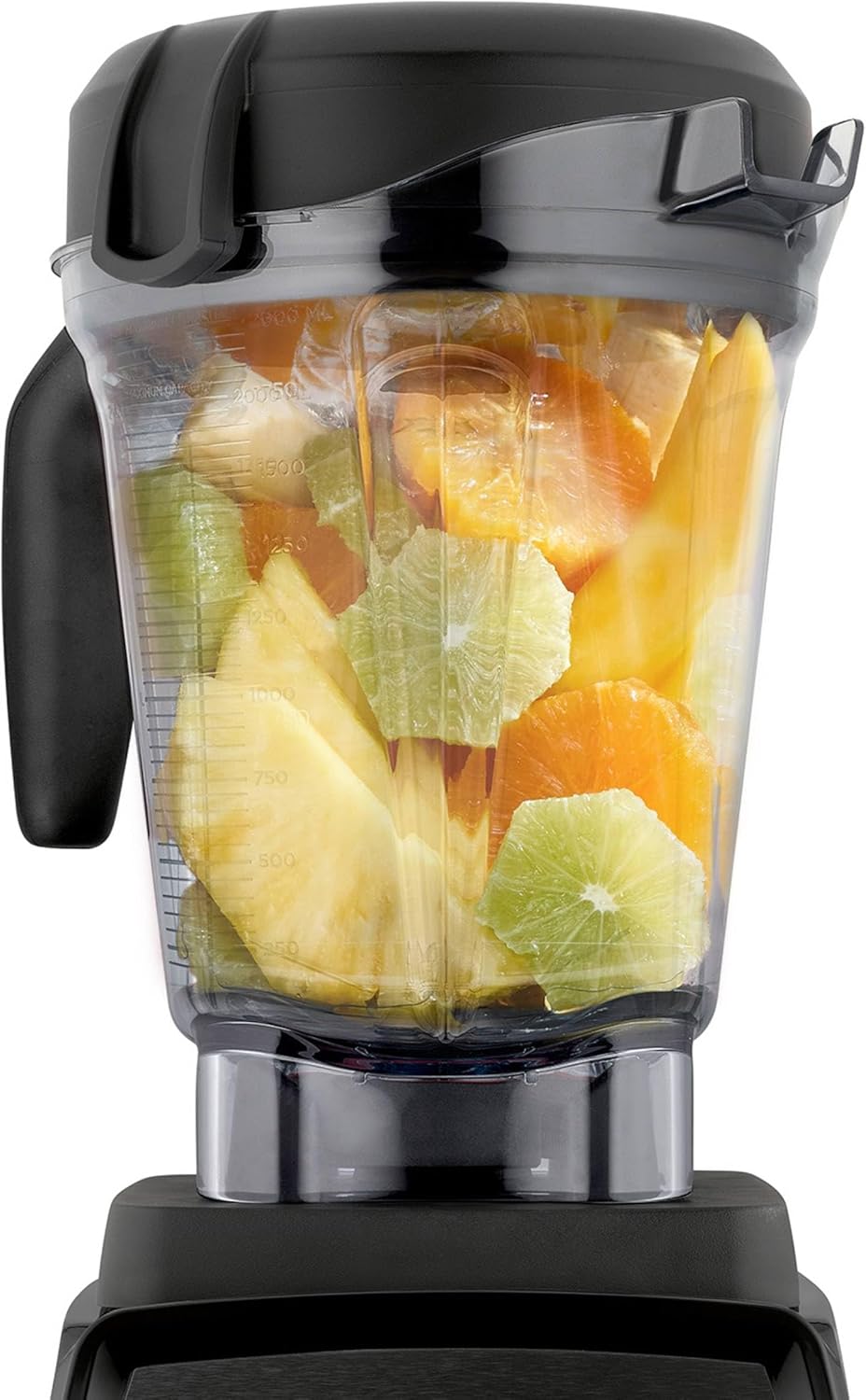
If you’ve ever cracked the lid of your Vitamix blender — that high-powered countertop machine that processes everything from frozen smoothies to hot soups — you’ve probably stared at the plastic container and thought: what happens if I need another one? Maybe the gasket seal is leaking. Maybe you want a dedicated container for savory blends so your smoothies stop tasting like garlic hummus. Maybe you’re running two batches simultaneously and need a second unit ready to go. Whatever the reason, you’re now standing at a fork: buy a genuine Vitamix-branded container (OEM, which stands for Original Equipment Manufacturer), or save money with an aftermarket alternative made by a third party. This guide exists to make that decision clean. We’ll walk through the compatibility matrix Vitamix actually uses, why it matters more than most buyers expect, and the honest cost math on both paths.
The Compatibility Problem Nobody Warns You About
Here’s the thing Vitamix doesn’t advertise loudly but absolutely should: not every container fits every base. This is not obvious. You can own a Vitamix, see a container on sale, and buy it — only to discover the coupling (the plastic drive socket at the bottom of the container that connects to the motor’s spinning drive) is a different generation and physically won’t seat correctly on your machine.
Vitamix has released containers across several platform families over the years, and the company organizes them into series. The dominant ones currently in circulation as of mid-2026 are:
- Classic series (older C-series machines like the 5200, 5300, and CIA Professional): uses a 2-part blade assembly you can disassemble for cleaning; has a legacy coupling style
- Next Generation / G-series (machines like the 7500, 750, and most of the A-series Ascent lineup): uses an integrated wet blade assembly; wider container profile
- Ascent / SELF-DETECT series (A2300, A2500, A3300, A3500 — the current flagship line): adds NFC-style container recognition chips that communicate with the base to enforce program safety
That third category is where buyers get surprised. Ascent machines use a SELF-DETECT system — a wireless identification chip embedded in compatible containers. When the base doesn’t recognize the container, it restricts certain preset programs. According to Vitamix Corporation’s container compatibility documentation published on vitamix.com, if you run a non-SELF-DETECT container on an Ascent base, the machine will still blend — but timed programs and automated presets may be blocked or behave unexpectedly. For someone running an A3500 specifically for its programmable presets, this is a meaningful functional limitation, not a minor footnote.
The quick compatibility test before you buy anything: Find your machine’s model number (usually on the bottom of the base) and cross-reference it against the container guide at vitamix.com. If your base is an Ascent model, you need a SELF-DETECT-equipped container for full functionality — full stop.
OEM Containers: What You’re Actually Paying For
Vitamix OEM containers aren’t cheap. As of May 2026, the standard 64-oz low-profile container retails around $200–$230 purchased separately through vitamix.com. The 32-oz personal cup adapter runs closer to $140. The dry grains container — a narrower container optimized for flours and powders — sits around $160–$175. That pricing makes people flinch, and understandably so. But the OEM price is buying you several specific things.
OEM: What the Premium Covers
Warranty protection. Vitamix’s standard warranty on containers is five years (some promotions and refurbished program units differ — always read the product documentation at vitamix.com before purchasing). Using a non-Vitamix container won’t void your base warranty, but it also won’t extend any protection to the container itself. If an aftermarket blade assembly seizes and damages your drive coupling, that liability rests entirely with you.
SELF-DETECT chip compatibility. On Ascent machines, this is non-negotiable for preset functionality. Wirecutter, in its “The Best Blenders” review published on wirecutter.com, consistently notes that Ascent owners who tested non-chipped containers reported “container not detected” errors that interrupted timed blending protocols.
Blade geometry matched to the motor profile. Vitamix engineers the blade pitch and container taper together. The vortex a 64-oz Vitamix container creates is optimized for the motor speed curves of Vitamix bases — not a generic assumption about blending physics.
Eastman Tritan copolyester construction. Vitamix OEM containers are made from Tritan, a BPA-free copolyester from Eastman Chemical Company that has become the industry benchmark for food-safe plastic clarity and impact resistance. The microplastics question around all plastic containers is legitimately unsettled science — Consumer Reports has flagged ongoing research into microplastic shedding from plastic blender containers more broadly, in its blender ratings and reliability coverage on consumerreports.org — but Tritan is the best-tested material option in this category and Vitamix’s use of it is a documented specification, not a marketing claim.
Vitamix
$249.95
In stock on Amazon
Check price on AmazonAftermarket Containers: Where the Savings Are Real (and Where They Aren’t)
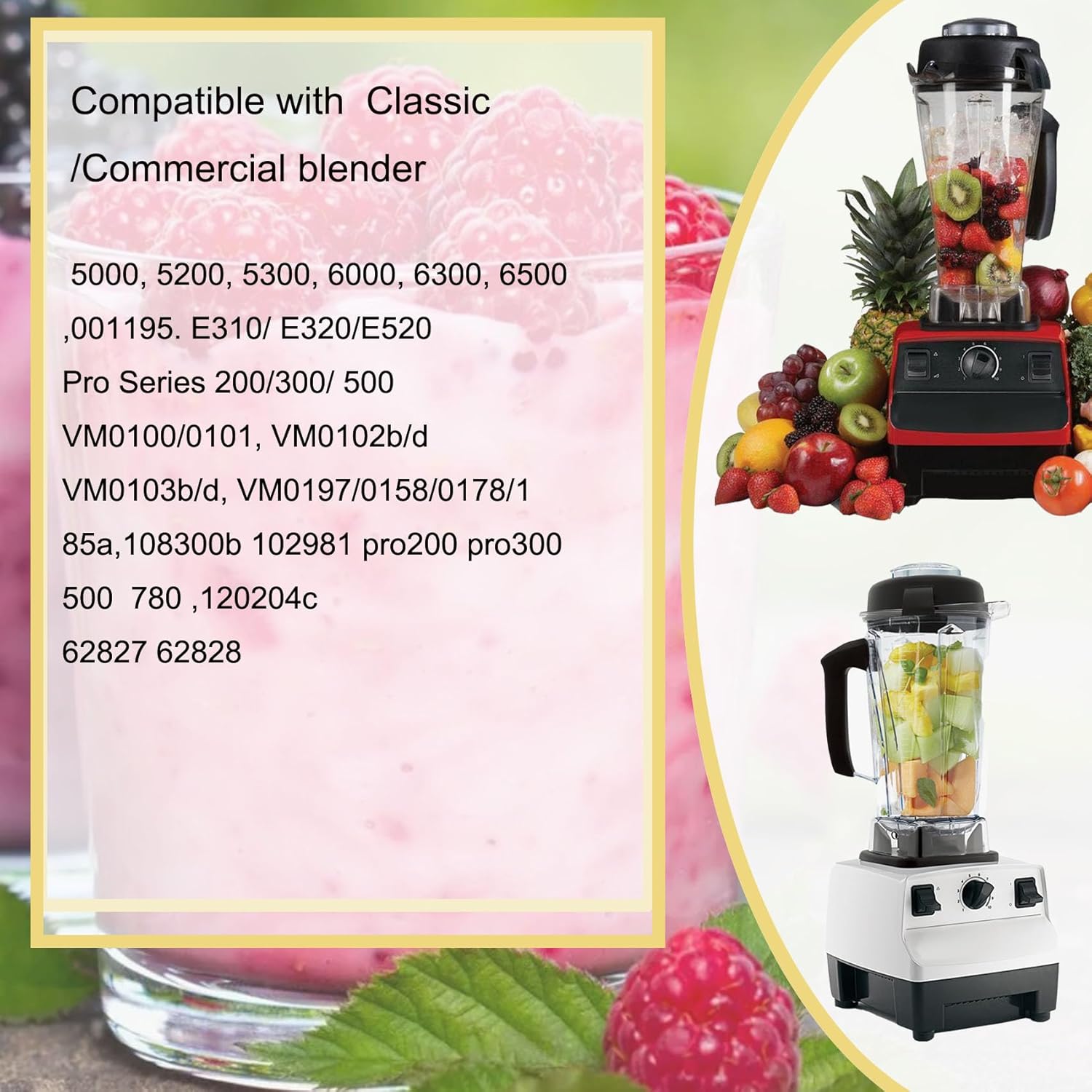
The aftermarket for Vitamix-compatible containers has matured significantly. As of 2026, the most commonly reviewed third-party options sell through major retail channels, typically priced $60–$110 for a 64-oz-equivalent container — roughly a 50–60% discount versus OEM. The savings are real. Whether they’re worth it depends almost entirely on which machine platform you own and how you use it.
Aftermarket on Classic-Series Machines
Owners of older Classic-series machines — the 5200, 5300, and CIA Professional models — generally report more positive aftermarket experiences. The coupling system is simpler, there’s no SELF-DETECT requirement, and the consequences of a compatibility mismatch are lower. For this cohort, the savings math frequently pencils out, especially for a second container dedicated to dry goods or batch-prep overflow.
The caveat worth naming: many aftermarket vendors describe their containers as “BPA-free,” which is accurate but tells you nothing about what plastic compound they actually used or how it holds up under repeated high-speed, high-friction blending cycles. Apartment Therapy, in its piece “Is a Vitamix Worth It? Here’s What to Know Before You Buy” published on apartmenttherapy.com, notes that the microplastics conversation is pushing more buyers toward scrutinizing container materials more carefully — and “BPA-free” doesn’t equal “Eastman Tritan” or anything close to it. Vet vendors who can actually name their resin.
Blender
$46.99
In stock on Amazon
Check price on AmazonAftermarket on G-Series Machines
Owners of G-series machines (7500, 750, 780, Pro 750) report more mixed results with aftermarket containers than Classic-series owners do. Coupling wobble, blade assembly fit variance, and lid seal inconsistency appear more frequently in long-run owner reviews at the 6-to-12-month mark. Serious Eats, in its “The Best Blenders, Tested and Reviewed” coverage on seriouseats.com, observes that premium blender performance is closely tied to the container, blade, and base functioning as an integrated system — and third-party containers introduce mechanical variables the motor wasn’t tuned to manage.
For G-series owners, aftermarket containers are viable for secondary use cases (dry grains, batch prep overflow, a travel kit). For a primary daily-driver replacement, the refurbished OEM path described below is the stronger call.
Vitamix
$179.95
In stock on Amazon
Check price on AmazonAftermarket on Ascent-Series Machines
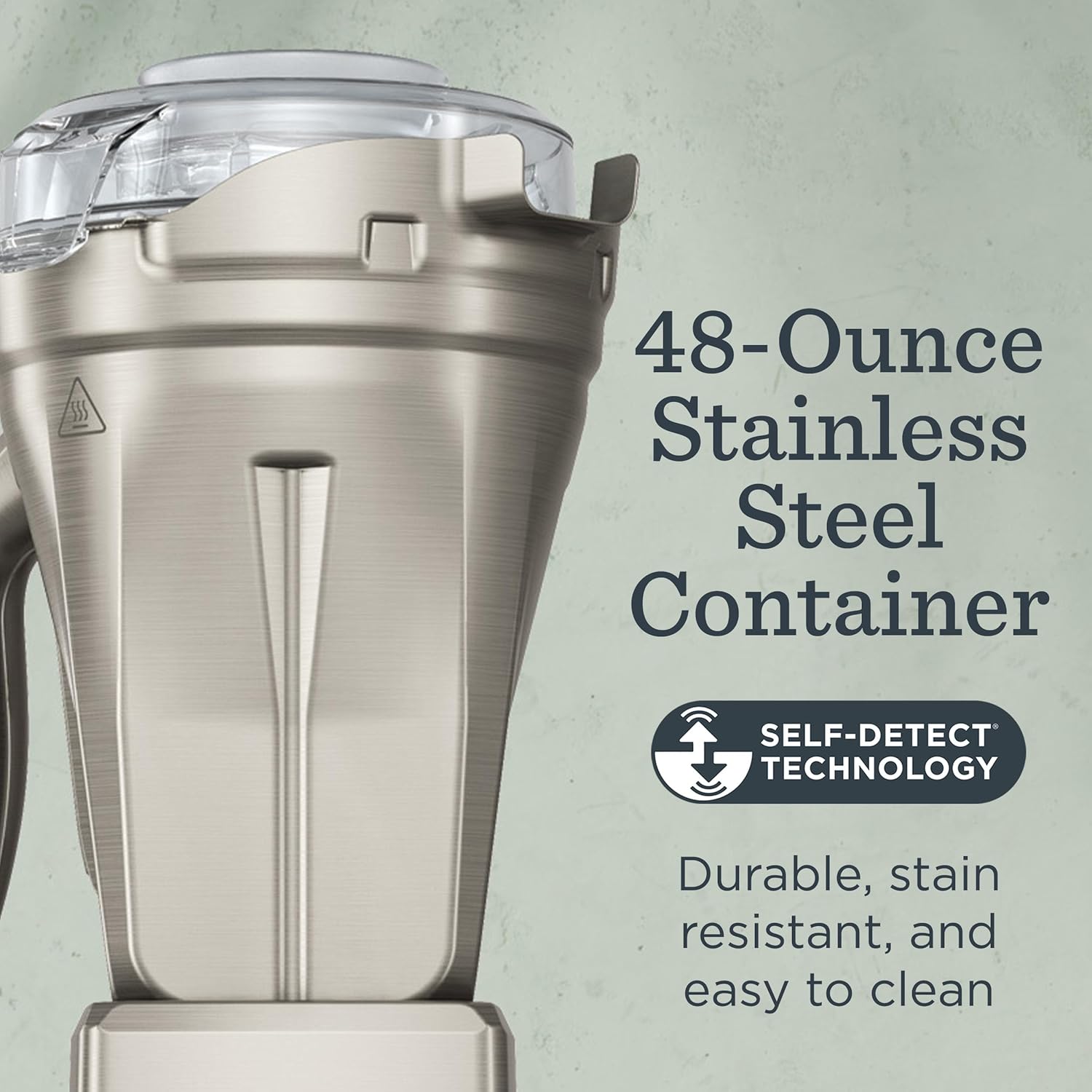
This is where the aftermarket savings story breaks down most completely. Ascent machines (A2300, A2500, A3300, A3500) require SELF-DETECT-chipped containers for full preset functionality. As of mid-2026, genuine SELF-DETECT chip support in aftermarket containers is rare and inconsistently documented. “Compatible with Ascent” in marketing language does not reliably mean SELF-DETECT chip support is present — those are different claims. If you own an Ascent machine and want to buy aftermarket, you need the vendor to confirm SELF-DETECT chip support in writing, not implied by a compatibility bullet point.
For Ascent owners who find the new OEM price steep, the refurbished OEM path is the better compromise. The stainless steel aftermarket option is the only plastic-free alternative in this space, but it sacrifices blend visibility, adds weight, and doesn’t resolve the SELF-DETECT issue.
Vitamix
$249.95
In stock on Amazon
Check price on AmazonThe Refurbished OEM Path Most Buyers Overlook
Before treating this as a strict OEM-versus-aftermarket binary, there’s a third option Vitamix’s own certified refurbished program makes available: refurbished OEM containers.
Vitamix sells factory-reconditioned containers through vitamix.com with a shorter but genuine warranty — typically three years on refurbished units, though terms update and should be verified at point of purchase through vitamix.com directly. Pricing on refurbished containers tends to run $100–$140 for the standard 64-oz — meaningfully cheaper than new OEM, with legitimate material provenance and SELF-DETECT functionality intact where applicable.
Per Vitamix’s refurbished program documentation on vitamix.com, units are inspected, cleaned, and re-certified before resale. This path threads the needle on cost and confidence. For Ascent owners in particular, refurbished OEM is the path we’d lean toward when new OEM pricing feels steep.
Cost Comparison: By the Numbers
Replacement container pricing (64 oz, May 2026 estimates):
| Container Option | Estimated Price | SELF-DETECT (Ascent) | Warranty |
|---|---|---|---|
| New OEM via vitamix.com | ~$200–$230 | Yes | 5 years |
| Vitamix certified refurbished | ~$100–$140 | Yes (where applicable) | ~3 years |
| Aftermarket (standard plastic) | ~$60–$110 | Rarely; verify explicitly | Typically ≤1 year |
| Aftermarket stainless steel | ~$80–$130 | No | Varies |
The Decision Matrix: If X, Then Y
This is where the practitioner answer lives. Run through the matrix for your situation:
If you own an Ascent series machine (A2300, A2500, A3300, A3500): Do not buy aftermarket unless the specific SKU carries confirmed SELF-DETECT chip support and the vendor states that explicitly — not just implied by “Ascent-compatible” marketing. The functional restriction on presets is real and will frustrate daily-protocol users. Buy OEM refurbished through vitamix.com if cost is the constraint.
If you own a G-series machine (7500, 750, 780, Pro 750): Aftermarket is viable for secondary-use containers. For a primary replacement, refurbished OEM is still the better value — coupling tolerances matter more than buyers expect at high RPM, and blade wobble on cheaper aftermarket assemblies is a documented failure mode after heavy use.
If you own a Classic series machine (5200, 5300, or older): The aftermarket math works in your favor if you’re budget-constrained. The legacy coupling is simpler, parts are well-documented, and SELF-DETECT doesn’t apply. Vet the vendor — look for documented resin material claims (not just “BPA-free”) and a return window of at least 30 days.
If microplastics are your primary concern: Neither new OEM Tritan nor most aftermarket plastics will fully resolve that concern with current science. A stainless aftermarket container is the only plastic-free option in this category, but you’ll lose blend visibility and add weight. Consumer Reports’ ongoing blender and plastics coverage on consumerreports.org is the most reliable place to track that research as it develops. Treat this as a personal risk-tolerance call, not a safety emergency — but don’t let a vendor’s “BPA-free” label do more work than it can honestly do.
If you’re evaluating a second container for small food-service use: Volume and throughput math shifts the equation sharply. At the rates a professional context runs, container wear accelerates, blade assemblies need periodic replacement, and warranty coverage becomes a real operating cost. In this context, OEM — new or refurbished — is the only defensible choice. The delta in container cost is noise against the labor cost of a mid-service blade failure.
The Vitamix container decision isn’t about brand loyalty — it’s about matching the container to the machine platform, the use case, and the warranty exposure you’re comfortable carrying. The compatibility matrix is real, the SELF-DETECT limitation is real, and the refurbished OEM path is genuinely underused by buyers who’ve been conditioned to treat “refurbished” as a quality concession rather than a cost optimization. Run your machine model first, your use case second, and let the cost math close from there.